Moon Square Saturn Between a Parent and a Child
Galaxia describes what a chart shows, not what will happen. How we write about astrology →
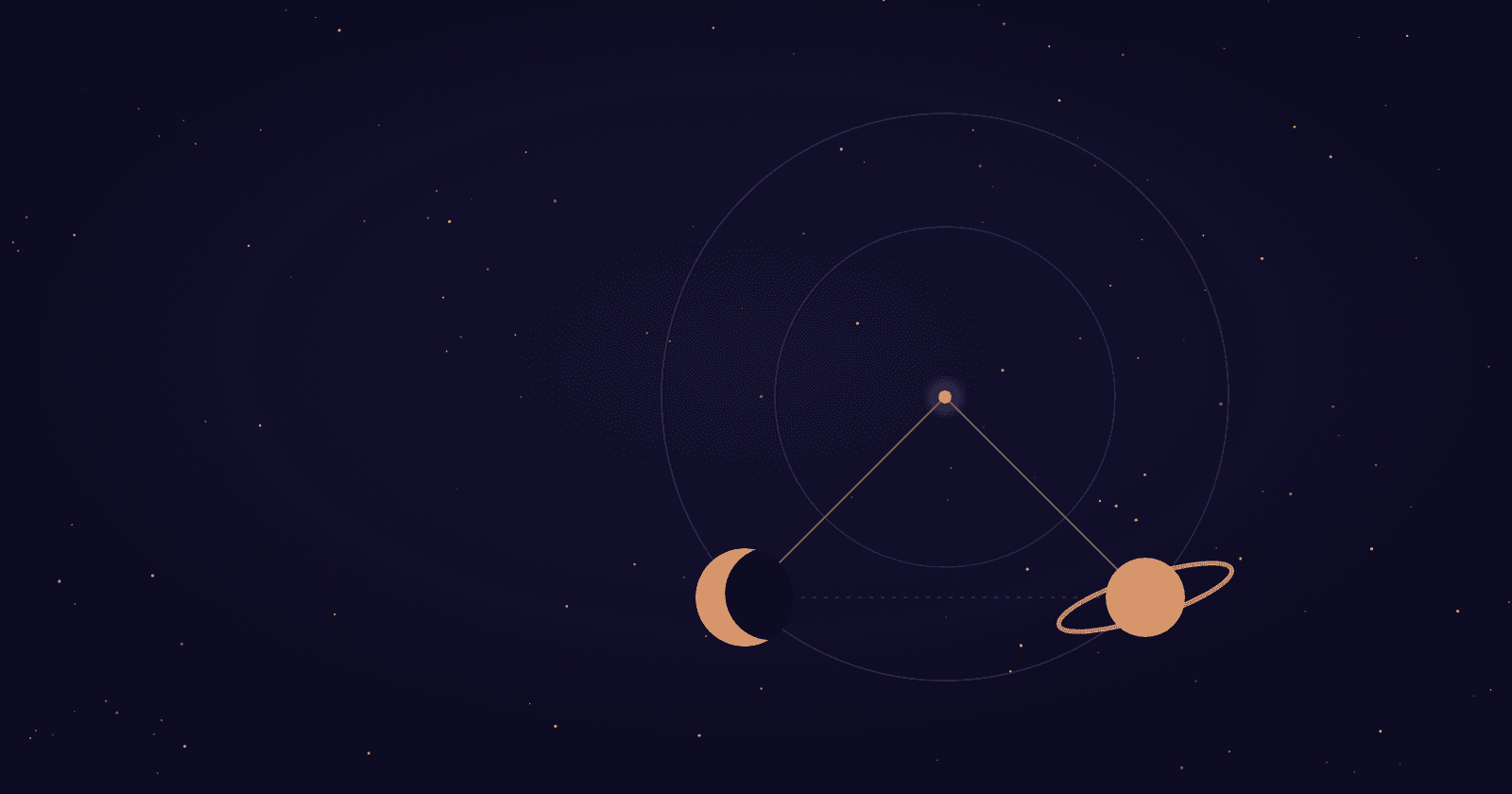
Moon square Saturn is one of the most common hard aspects in synastry. Almost all of the existing writing about it focuses on romantic partnerships: the Saturn person feels the Moon person’s emotional needs as a pressure, the Moon person feels the Saturn person’s structure as withholding, and both feel the gap without being able to explain it. That description is accurate. It also applies almost exactly to a specific and very common parent-child configuration, which almost nobody writes about.
Here is what it actually looks like in a family.
Next step
Enter a birth date and see placements computed from the sky, free in about 60 seconds.
See your own chart in 60 seconds, freeWhat the aspect means
The Moon represents emotional need and emotional expression: what someone requires to feel safe, received, connected. Saturn represents structure, limits, and the instinct toward containment. When one person’s Moon makes a square to another person’s Saturn, those two things are in friction. Not opposition, not alignment, friction. The Moon person brings emotional content and the Saturn person’s natural response is to compress or redirect it. Neither person is trying to hurt the other. This is just what each one does.
A square is a 90-degree angle. In a birth chart it describes two parts of one person that do not easily cooperate. In synastry it describes two people whose tendencies meet at that same awkward angle. The seven synastry aspects that shape how a relationship feels cover this contact in the romantic and general case. This post is the family version, because the parent-child chart is where the pattern often starts, and where it can run for decades before anyone has language for it.
In a parent-child configuration, this most often plays out with the Saturn parent and the Moon child, though it can run the other way. The child brings their emotional life to the parent, and the parent’s response is to reframe it, redirect it toward something productive, minimize it, or move quickly past it. “You’ll be fine.” “What are you going to do about it?” “I don’t know why you’re making this such a big deal.” These are not attacks. They are a Saturn mind encountering an emotion and doing what it does: looking for the structure underneath it.
What the Moon child experiences
From the child’s side, this registers as: what I am feeling is not welcome here. The lesson the child draws, often without articulating it, is that their emotional life is inconvenient or too much or something to be managed rather than felt. Over time, they get very good at managing it themselves. They become self-sufficient and hard to reach. They stop bringing things they expect to be turned away, which happens faster than most people think and earlier than most parents realize.
Adults who grew up with this dynamic often have a particular shape to their relationship with their own needs. They may be skilled at crisis, reliable under pressure, and surprisingly unavailable when something is just hard. They may have internalized the Saturn voice so thoroughly that they apply it to themselves before anyone else gets the chance. They do well in environments that reward self-sufficiency. They sometimes find close relationships difficult in ways they cannot quite name, because the template they have for emotional expression is compression rather than contact.
This is not a diagnosis. Plenty of people with this synastry in their family chart are warm, available, and fluent in their own feelings. The aspect describes a pressure. What someone does with the pressure is theirs.
What the Saturn parent experiences
From the parent’s side, the dynamic looks different. The reframe toward action, the movement past the feeling, feels like help. Saturn placements often belong to people who experienced their own emotional struggles as things to push through, and pushing through worked. They are offering their children the same tool. The fact that the child does not receive it as help is genuinely confusing to the parent, because from inside the Saturn frame, the tool is the caring.
What the Saturn parent usually does not see is that the child is not asking for a tool. They are asking to be seen in the feeling before they do anything with it. That is a very different request, and Saturn does not have a native response to it.
A Saturn parent who is reading this and recognizing themselves is already doing more than the aspect requires. Recognition is not the same as blame. That pattern was there before the child was. The parent did not install it to cause harm.
Why neither person is to blame
The difficulty of this aspect in a parent-child relationship is that neither person is usually trying to hurt the other and both people usually know something is off without being able to locate it. The parent often knows they were not as emotionally available as they could have been and feels some version of guilt or regret about it. The child often knows the parent cared and is confused by why it did not feel that way.
The aspect does not mean the parent did not love the child. It means the parent’s way of expressing love did not connect with the child’s way of receiving it. Those are two different problems and they are worth keeping separate, because conflating them is how both people end up holding blame that does not belong to them.
A birth chart cannot tell you who was right. How Galaxia handles astrology. Synastry cannot either. What a synastry chart actually tells you is a map of flows and catches, not a verdict. This aspect is a catch. It is a specific one, and it is easier to work with once you can name it.
What a Saturn parent can actually do
Very little of this is conscious on either side. But if a Saturn parent becomes aware of the dynamic, even partially, there is one thing that tends to work: staying in the feeling with the child a moment longer before moving to what to do about it. Not indefinitely. Just longer than the instinct says to.
The instinct says: we need to solve this. The child, most of the time, is not asking for the problem to be solved. They are asking for the feeling to be acknowledged before the solving starts. Those two things can be separated by as little as two sentences and as much as a silence that says I hear you before it says here is what to do. It does not come naturally to Saturn placements. That is the whole point. It can be practiced, and the child usually knows the difference.
If the child is now an adult, the same move still works, just in adult language. You do not have to become a different parent. You have to pause one beat longer than feels efficient.
What a Moon child can do with this information
Knowing that the parent’s structure was not rejection changes something. It does not undo the gap or the things that came from it. But it can stop the child spending decades asking what was wrong with them that the parent could not meet them. The parent was not calibrated for what they brought. That is different from the parent not caring, and the difference is worth locating.
If you are also looking at how each of you repairs after conflict, the Moon signs themselves are a second translation layer. What your mother’s Moon sign says about how she says sorry is that reading. The square is the architecture. The Moon signs are the dialect.
Look at your own family chart
Run a synastry between you and a parent or child to see whether this square shows up between your charts.
Run your free chartRead next
7 Synastry Aspects That Reveal How Relationships Feel
Venus conjunct Mars, Moon square Saturn, and 5 more synastry aspects that shape how a relationship feels. Here is what those lines describe.
What Your Mother’s Moon Sign Says About How She Says Sorry
The Moon sign is emotional reflex: the feeling that arrives before you choose. Family conflict tests that more than almost anything else.